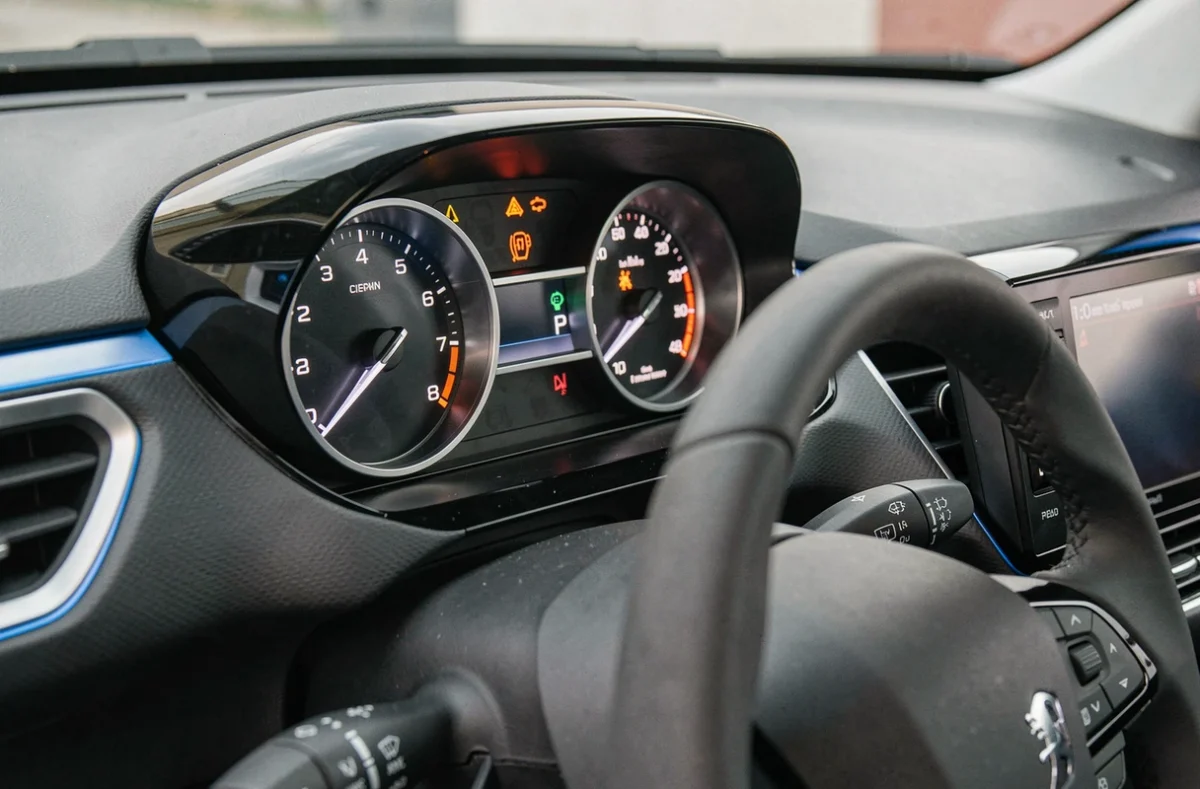
On a Peugeot 208, the dashboard can display several dozen different symbols. Their color, shape, and behavior (steady or flashing) convey information of varying severity. Understanding the color codes and symbols of the Peugeot 208 dashboard is akin to reading a three-level alert system, where each hue triggers a specific reaction from the driver.
Comparison table of alert levels by color on the Peugeot 208
The color hierarchy of the dashboard follows a logic similar to that of a traffic light. The table below summarizes the three levels and their associated reactions.
| Color | Urgency Level | Expected Reaction | Examples of Indicators |
|---|---|---|---|
| Red | Critical | Immediate stop of the vehicle | STOP, oil pressure, engine temperature, braking system, battery |
| Orange / Yellow | Warning | Quick check in the workshop | Engine light, ABS/ESP, tire pressure, maintenance |
| Green / Blue | Information | No action required | Turn signals, low beam, high beam, active cruise control |
This color coding serves as the first reflex for reading. Even before identifying the precise symbol, the hue of the indicator shows whether the situation requires a stop, a trip to the garage, or simply acknowledgment.
For a more detailed explanation of the Peugeot 208 dashboard with each pictogram, the symbol-by-symbol correspondence usefully complements this initial sorting by color.

STOP and SERVICE Indicators on Peugeot 208: Two Severity Indicators Often Confused
A common confusion among 208 drivers concerns the STOP and SERVICE indicators. These are not system indicators but severity indicators. They do not signal a specific malfunction themselves: they amplify the message of another indicator that is already lit.
The Red STOP Indicator
STOP lights up in red when a serious fault is detected by another sensor in the vehicle. It may accompany an oil pressure issue, engine overheating, a braking system fault, or a drop in battery charge.
The appearance of the STOP indicator requires an immediate safe stop. Continuing to drive with this light active exposes the engine or braking system to damage that may become irreversible.
The Orange SERVICE Indicator
SERVICE operates on the same logic but with a lower degree of urgency. It accompanies an orange indicator and signals that a workshop visit is necessary within a reasonable timeframe, without requiring an immediate stop.
The distinction between these two indicators allows for calibrated reactions. A driver who identifies SERVICE can plan a diagnostic appointment. A driver who sees STOP must park as soon as possible.
3D Alerts on the Digital i-Cockpit: A Hierarchy Beyond Color
Recent versions of the Peugeot 208 equipped with the 3D digital instrumentation (i-Cockpit) add an additional level of reading. Critical alerts are projected to the forefront of the driver’s field of vision, while comfort information remains in the background.
This system utilizes visual depth to accelerate reaction time. An oil pressure or overheating indicator literally appears closer to the driver than an active cruise control indicator. Color remains the primary sorting criterion, but position in 3D space enhances prioritization.
On the electric e-208, this hierarchy also applies to specific high-voltage alerts. A fault related to the high-voltage electrical system is treated with the same visual priority as a braking or overheating issue in a thermal engine.
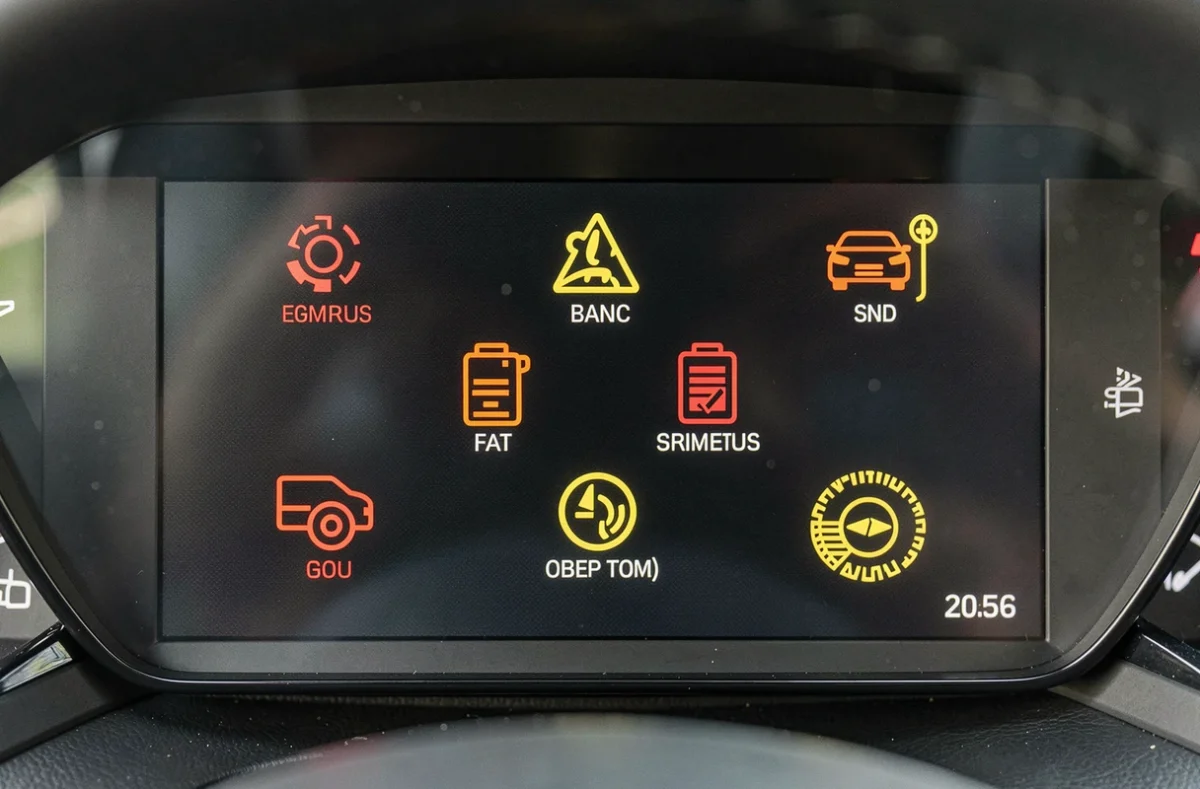
Orange Engine Indicator on Peugeot 208: Diagnosis and Pitfalls to Know
The engine indicator (represented by a stylized engine block pictogram) is the most frequently lit orange indicator on the 208. It covers a wide spectrum of anomalies, from a simple faulty sensor to an injection or pollution issue.
A steady orange engine indicator signals an anomaly requiring electronic diagnosis. The vehicle can generally be driven at moderate speed to the workshop. In contrast, a flashing engine indicator indicates a more serious active fault, often related to misfires that could damage the catalytic converter.
Several situations trigger this indicator on the 208:
- A fault on a lambda sensor or a pressure sensor in the intake circuit, common after several tens of thousands of kilometers
- A problem related to the pollution control system (clogged particulate filter, AdBlue circuit on diesel versions)
- A temporary electronic anomaly that may disappear after a restart cycle but remains recorded in the computer’s memory
The classic pitfall is to erase the fault code without addressing the cause. A complete electronic diagnosis remains the only reliable method to identify the exact origin of the alert and prevent it from reappearing.
Specific Indicators to Monitor According to the 208’s Engine Type
The Peugeot 208 comes in petrol, diesel, and electric versions. Each engine type generates its own alerts.
- On PureTech petrol versions, indicators related to oil pressure and oil consumption deserve particular attention. These engines may signal low oil levels between services
- On diesel versions, the preheating indicator (orange spiral) and alerts related to the particulate filter or AdBlue system are specific to this engine type
- On the electric e-208, high-voltage alerts, the charging indicator, and range indicators replace the traditional thermal indicators. A red indicator related to the high-voltage circuit imposes the same precautions as a STOP indicator on a thermal version
Identifying your engine type allows you to filter relevant indicators and avoid searching for the meaning of an indicator that does not pertain to your vehicle.
The dashboard of the 208 communicates through a structured visual language. Color indicates the level of urgency, the symbol identifies the concerned system, and on recent versions, the 3D depth accelerates reading. Keeping in mind the distinction between STOP and SERVICE is sufficient to cover the majority of situations encountered daily.