In 2020, the wearing of joggers surpassed that of jeans in global sales for the first time, according to a study by the NPD Group. Fashion trends, long dictated by luxury houses, are now reversing under the influence of social media and identity movements.
Some ancestral dress codes, deemed archaic a decade ago, are reappearing on runways and in the streets, reinterpreted by a generation in search of new markers. Public policies are getting involved, sometimes trying to regulate or frame individual expressions through clothing.
When fashion becomes a mirror of values and social changes
Clothing is no longer just a second skin: it questions, it challenges, it imposes itself in public debate. Fashion, styles, trends: these markers tell much more than stories of fabrics. Today’s fashion, in France and beyond, functions as a living barometer of collective tensions and desires. Joggers are asserting themselves in public spaces, men’s skirts are trying to carve out a place, bourgeois codes are crumbling, sometimes even evaporating. Brands, driven by profitability but also by the spirit of the times, draw inspiration from the streets, diversity, and cultural mixing. This frenetic circulation of influences attests to the porosity between social groups and the fluidity of symbolic boundaries. Georg Simmel, at the beginning of the 20th century, observed fashion as a social phenomenon, constantly torn between imitation and the desire to stand out. Pierre Bourdieu extended this reflection with the idea of distinction: fashion, a tool of classification, a silent weapon of social hierarchy. Through this lens, fashion influences our identity, reflects our place in society, while mirroring how we perceive the world. Dressing is no longer just a matter of class: it is a subtle game between self-assertion and recognition of the other. The relationship between fashion and society thus leaves its mark on our contemporary culture, as detailed on the page Fashion and Society: Impact and Influences on Contemporary Culture – Revue Magazine. Fashion, understood as a social phenomenon, bears the imprint of the upheavals that traverse society: affirmation of identities, struggles for visibility, blending of styles, and questioning of the established order. This ever-moving, sometimes distorting mirror reveals how society shapes itself, reinvents itself, and expresses itself through each garment.
Traditions, breaks, and hybridizations: how clothing tells the story of cultural evolution
Fashion refuses the straight line. It engages in a dialogue with history, drawing from legacies and constantly revisiting them. Clothing stands at the crossroads of tradition and rupture. They tell how our gaze on the world evolves, from familial heritage to the provocations of contemporary fashion designers. On the runways, yesterday’s couture makes an appearance, but always reworked, sometimes offbeat, between homage and challenge. With the rise of fast fashion, traditional markers fade: production accelerates on a global scale, trends travel at the speed of light. The hoodie, long marginalized, becomes a manifesto worn in the city. Old bourgeois codes collapse, the boundary between “outdated” and “desirable” becomes blurred. Hybridization seeps in everywhere: Asian influences are spotted in European streets, workers’ uniforms are reinvented by the big names in fashion. Among the younger generations, clothing transforms into a means of expression in its own right, oscillating between affirmation and play. Cultural studies analyze it as a vector of belonging, contestation, and the quest for authenticity. The readings of Roland Barthes and Georg Simmel offer keys: each clothing choice lies between imitation and distinction, between revisited tradition and radical creation. Fashion, always, redraws symbolic boundaries, revealing the silent transformations of society.

Identity, belonging, and individual expression: fashion at the heart of community dynamics
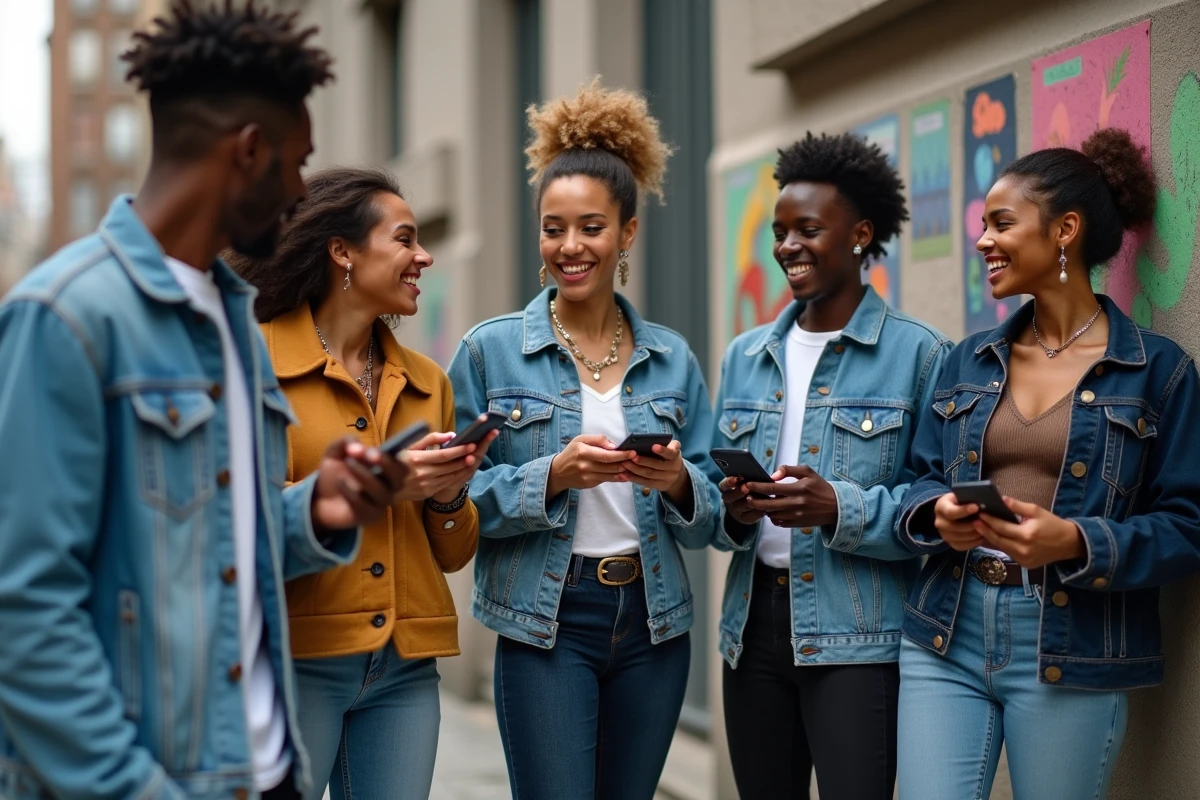
Fashion creates a silent language that shapes our identity and organizes our connections with others. It reveals what words circumvent: belonging to a social group, the desire to stand out or, conversely, the wish to blend into the crowd. In the streets of Paris and on the avenues of New York, clothing unveils, without a word, the tensions, hopes, and claims of each individual. The younger generations, in particular, mobilize fashion to assert their uniqueness while seeking their place in shifting collectives. Before listing the main dynamics, it is essential to remember that every gesture related to clothing translates a precise social positioning, a silent message about our relationship with society.
- Fashion as a means of expression: a tool for claiming rights or a sign of conformity, depending on the context.
- Social status: clothing signals a position but also a desire for ascension or contestation.
- Community cohesion: fashion brings people together, creates groups, but can also divide by excluding those who do not master its codes.
Because it structures our memberships and shapes our identities, fashion stands out as one of the privileged terrains where the values of contemporary society are invented and sometimes confronted. The silhouettes that traverse our cities today could very well be the living archives of our collective mutations.