
You used a Microlax, waited twenty minutes, and then nothing happened. When this micro-enema is no longer enough to unblock the situation, the temptation is to multiply the doses or randomly change laxatives. The problem is rarely a lack of product: it often comes from the location where the stools are blocked, their consistency, or a signal that the body sends that needs to be interpreted.
Why a micro-enema may remain ineffective
Microlax acts locally, in the rectum. It softens the stools present in the last centimeters of the intestine and triggers a reflex to evacuate. Its range of action stops there.
When the stool blockage is higher up in the colon, the product simply does not reach the affected area. You can repeat the operation several times: a micro-enema does not treat a high accumulation. It’s a bit like cleaning the entrance of a blocked pipe upstream.
Another common trap: false diarrhea. Small liquid stools or mucus can bypass a hard blockage and give the impression that transit is resuming. In reality, when you explore a little further, there is often a fecal impaction, a compact and dehydrated mass, that remains in place. This situation is particularly misleading in elderly or less mobile individuals.
If you are looking to understand why your Microlax is not working, suitable solutions exist depending on the precise cause of the blockage.
Fecal impaction and stool blockage: recognizing a situation that exceeds standard laxatives

Fecal impaction is a mass of hard stools, sometimes compared to a stone ball, stuck in the rectum or sigmoid. It does not resolve with a simple oral laxative or suppository. The body needs help to evacuate it, and this help often comes from a healthcare professional.
You may have noticed that despite the urgent need, nothing comes out, or that straining causes sharp pain at the anus. This is a typical sign. Other indicators should raise alarms:
- Abdominal pain that increases instead of subsiding, especially if accompanied by significant bloating
- Nausea or vomiting associated with the absence of stools for several days
- A discharge of brownish liquid or mucus without formed stool (the infamous false diarrhea)
- Fever, even mild, which may indicate a complication
Severe pain, vomiting, or fever require stopping all home treatment and consulting urgently. Continuing with enemas or laxatives in this context can worsen the situation.
Osmotic laxatives based on macrogol: the alternative when the rectum is not the only cause
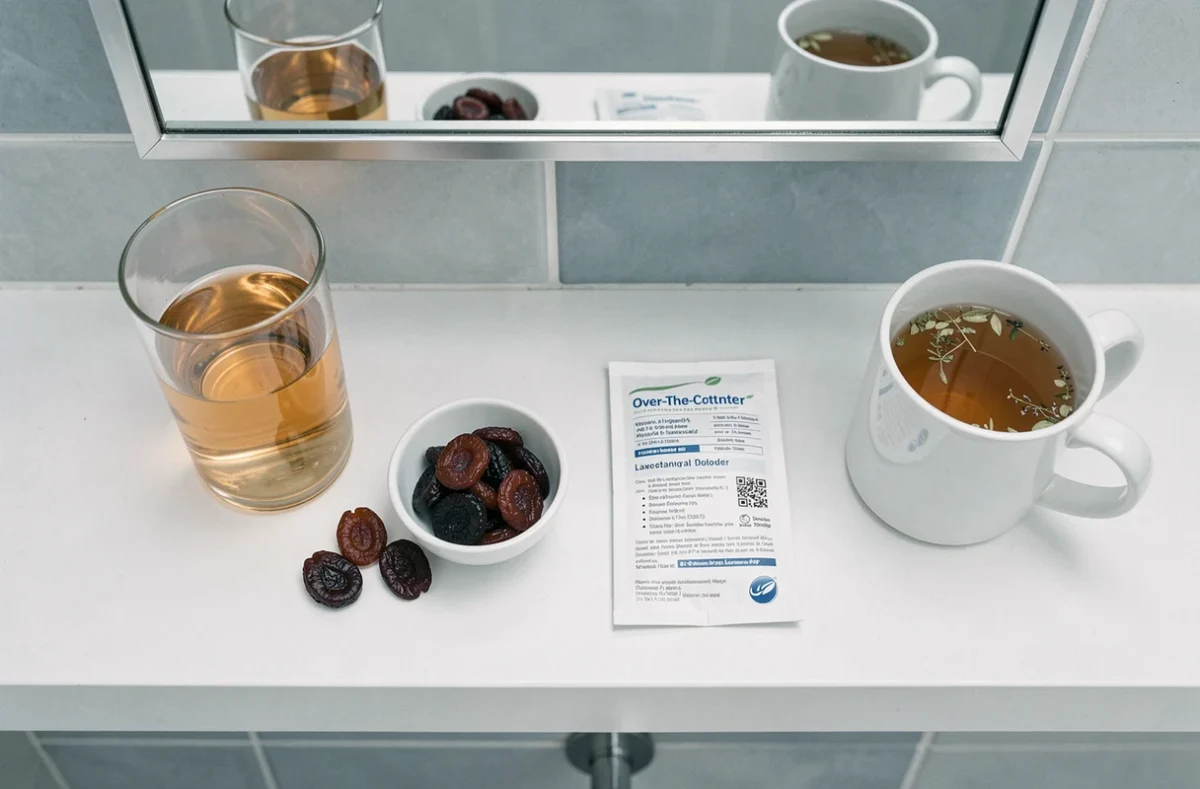
When the blockage exceeds the rectal area, a doctor may recommend an osmotic laxative, often based on macrogol. This type of product draws water into the intestine and gradually softens stools along their entire length, not just at the exit.
The difference with a micro-enema is fundamental: macrogol acts on the entire colon orally. It usually takes one to three days for the effect to manifest. It is not an immediate emergency solution, but it is often the only effective approach when stools are accumulated higher up.
A point that many ignore: abruptly increasing dietary fiber in cases of fecal impaction is counterproductive. Fibers swell in the intestine. If a blockage is already obstructing the passage, adding volume without evacuating the blockage worsens discomfort. It is better to first unblock the situation with an appropriate treatment, then gradually reintroduce fiber once transit is restored.
Phosphate enemas and manual extraction: what requires a doctor
Phosphate enemas are available at pharmacies and are sometimes used for self-medication. Their potency is greater than that of a Microlax, but so are their risks.
In dehydrated, renal or cardiac insufficient individuals, a phosphate enema can cause serious electrolyte imbalances. In fragile or elderly individuals, phosphate enemas should never be used without medical advice. This is not a product to take lightly just because it is available over the counter.
When no medication works, manual extraction of the fecal impaction by a healthcare professional remains the only option at times. It is a medical procedure performed with a gloved finger and lubricant, under control. It is not trivial and should not be attempted alone at home.
When to consult without delay
The rule is simple: if two attempts at home treatment (micro-enema, suppository, oral laxative) have yielded nothing in a few days, you should call your doctor. If symptoms such as increasing pain, vomiting, or blood appear, it is an urgent consultation, not a third attempt at laxatives.
Preventing recurrence after a severe constipation episode
Once the blockage is cleared, transit does not always resume on its own. The rectum may have lost some of its sensitivity after a fecal impaction episode, which can delay the evacuation reflex.
Three concrete strategies help limit recurrence:
- Drink enough water throughout the day, not just at meals, so that stools remain hydrated in the colon
- Gradually reintroduce fiber (cooked vegetables, fruits, whole grains) without forcing quantities in the first week
- Respect the gastrocolic reflex by going to the toilet after meals, even without a strong urge, to retrain transit
The position on the toilet also plays a concrete role. Elevating the feet with a small stool places the colon at a more favorable angle for evacuation. This is not trivial: this posture reduces the effort of straining and facilitates the passage of stools in the rectum.
An isolated episode of severe constipation does not mean a chronic problem. However, if the blockage recurs regularly despite a balanced diet and proper hydration, a medical evaluation can rule out an underlying cause (medications slowing transit, functional disorder, obstruction). The doctor can also adjust a long-term treatment to prevent each week from becoming a battle against a stubborn intestine.