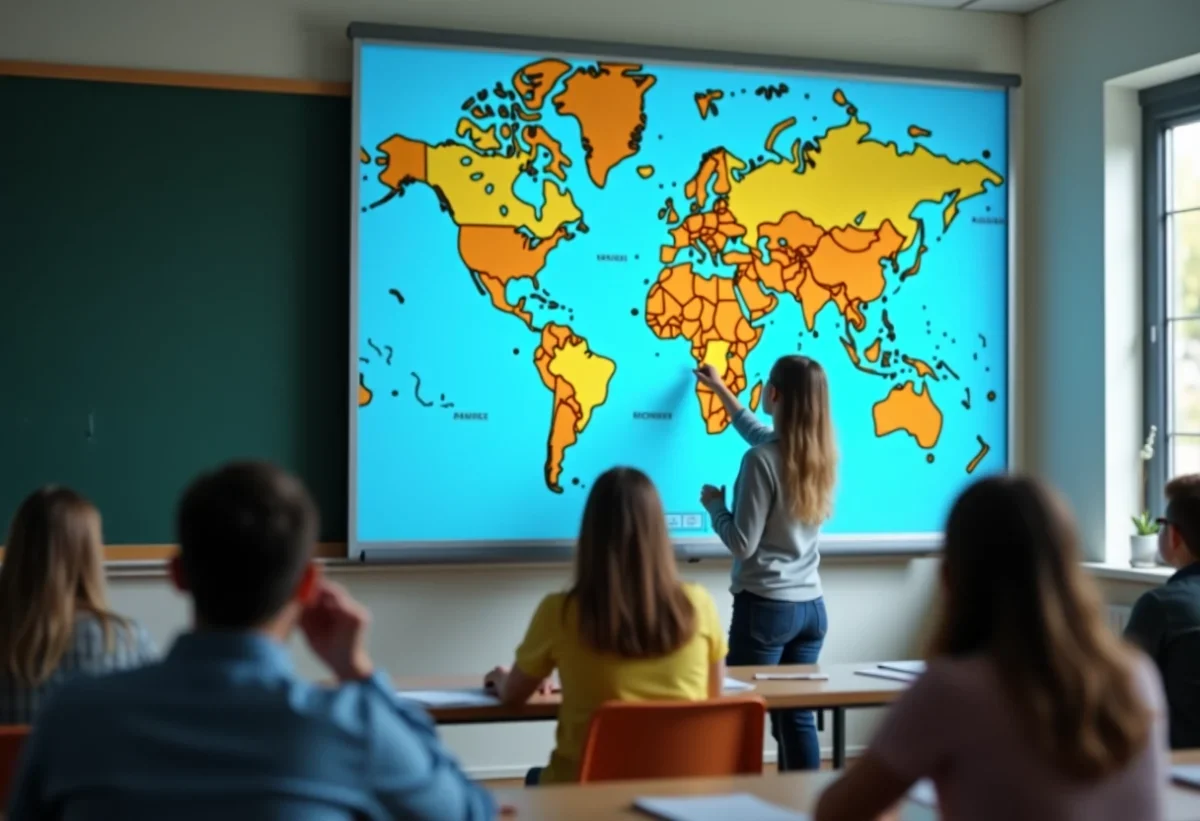
Teachers are constantly looking to make their geography lessons more engaging and relevant for their students. The use of interactive maps, immersive videos, and geographic software allows for the transformation of complex concepts into engaging experiences. Adapting these tools to the specific needs of students can make all the difference.
Each class is unique, with students having varying levels of understanding and interests. By integrating collaborative projects, local case studies, and interactive simulations, teachers can cater to diverse learning styles. This not only promotes better understanding but also a deeper appreciation of geography.
Analyze Needs and Educational Objectives
Teaching history and geography is a significant challenge due to the complexity of the subjects and the diversity of students. Nearly 60% of teachers believe that their teaching approach could be improved. A pedagogical approach must be tailored according to the age and level of the students.
Identify Specific Needs
To effectively personalize teaching tools, you need to know the needs of the students. Use assessments to measure the effectiveness of teaching methods. Here are some elements to consider:
- The students’ level of competence in geography.
- The interests and motivations of the students.
- The resources available in the institution.
Define Educational Objectives
Educational objectives must be clear and measurable. They serve as a guide for choosing the appropriate tools. Consider the following elements:
| Objective | Example Tool |
|---|---|
| Understand physical geography | blank map of France to print |
| Analyze geographic data | Interactive mapping software |
Teachers should use a pedagogical approach that includes varied techniques, such as storytelling and questioning, to make lessons more dynamic. Digital media, for example, can significantly enhance student engagement. 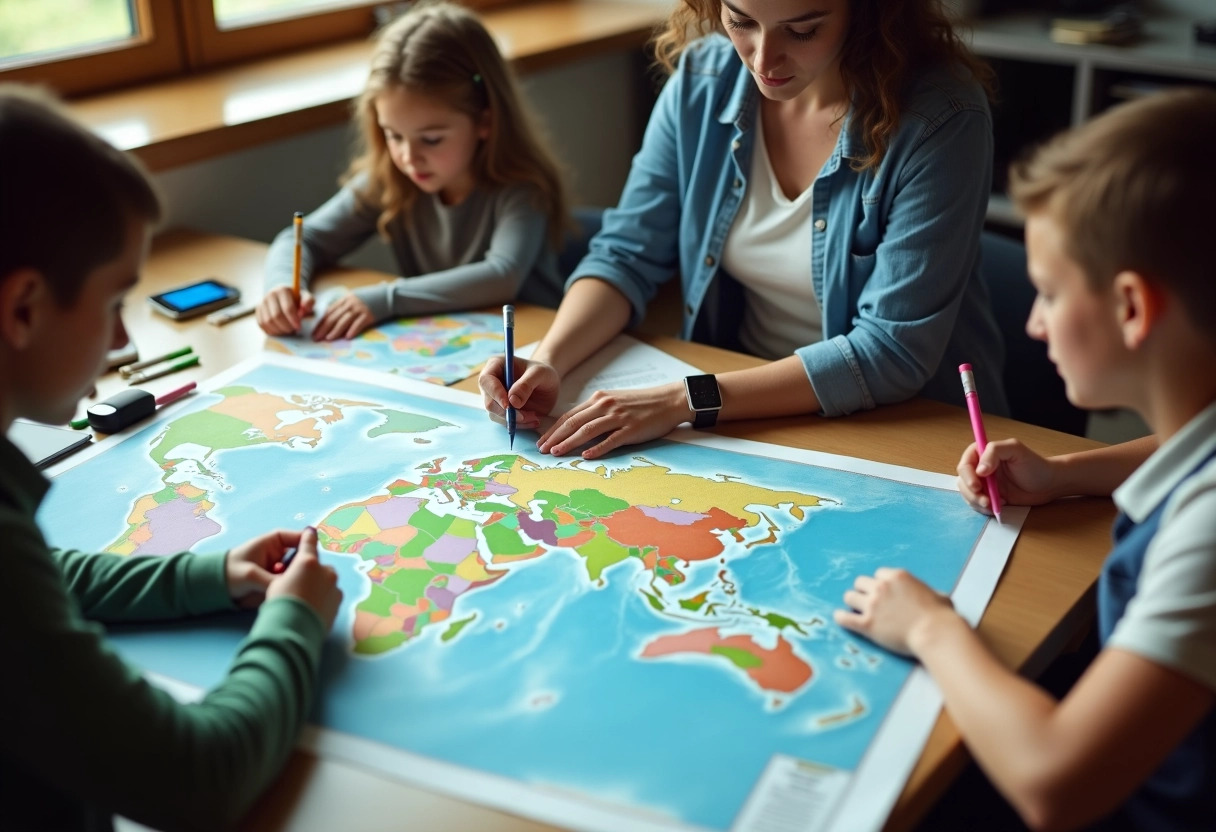
Select and Adapt Teaching Tools for Geography Instruction
Adapting teaching tools for geography instruction requires careful selection. Teachers must equip themselves with varied resources to meet diverse educational needs. Use teaching techniques such as storytelling, questioning, or project-based learning to make lessons interactive and captivating.
Digital media play a fundamental role in this process. With their ability to make information more accessible and engaging, they can transform how students perceive geography. Interactive maps, geographic system simulations, and educational videos are valuable tools that facilitate learning.
The Montessori approach, for example, emphasizes exploration and autonomy. Use objects like the globe or continent puzzles to help students understand the physical geography of our planet. Nomenclature cards and atlases are also effective resources for identifying countries and exploring different regions of the world.
The implementation of these tools must be thoughtful. Identify the educational objectives to be achieved: understanding spatial dynamics, analyzing geographic data, etc. Choose the appropriate tools. Visual resources like maps and diagrams help illustrate complex concepts, while collaborative projects encourage critical thinking and reflective spatial practice.
To optimize learning, combine different techniques and resources. For example, use a blank map of France to print for a hands-on exercise, then complement it with interactive mapping software to deepen the analysis. This integrated approach allows for a deeper and more lasting understanding of geographic concepts.