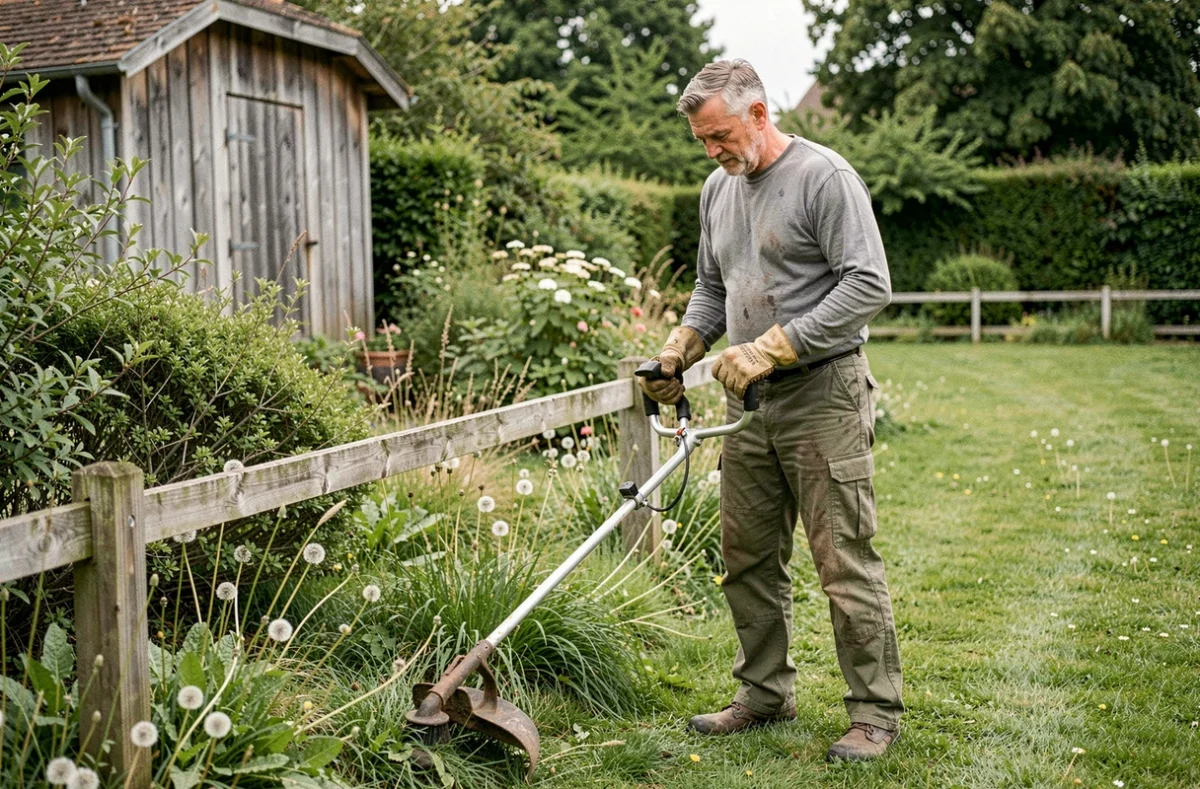
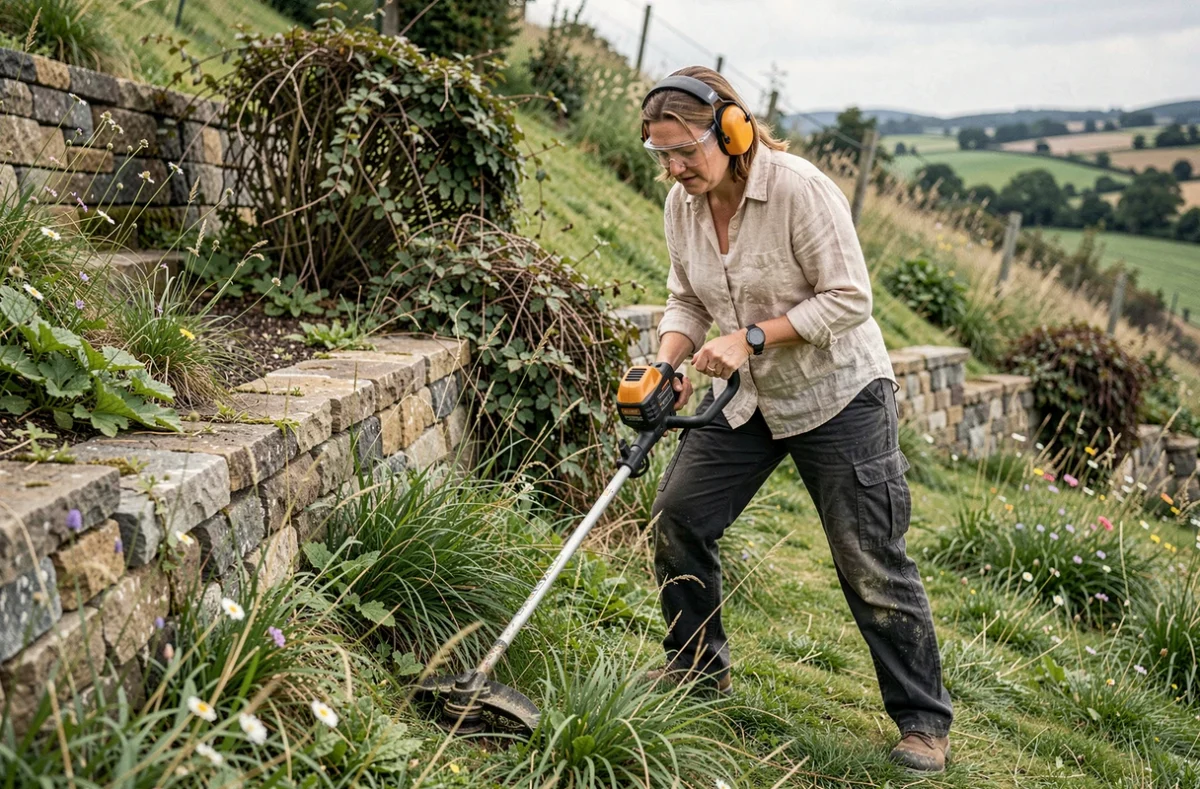
A brush cutter is defined by its ability to cut vegetation that a lawn mower cannot reach: tall grass, brambles and scrub on sloping or uneven ground. Choosing the right model depends less on raw power than on the specific work to be done, the terrain and, in some cases, the regulations governing maintenance of the plot.
Legal brush-clearing requirements: what the land calls for before choosing a machine
In areas subject to legal brush-clearing requirements (OLD), maintaining the land is more than a matter of convenience. The required work may extend beyond property boundaries, depending on the location and the prefectural orders in force.
One point that is often overlooked: regulatory brush clearing does not mean cutting all vegetation down to ground level. Local guidelines may require reducing low-growing vegetation, pruning certain branches and managing plant waste, while preserving designated trees.
This has a direct impact on equipment: a handheld string trimmer is not always enough. Depending on the requirements, you may need to add a blade-equipped cutting tool for woody stems, and even plan to remove or shred the waste.
Since January 1, 2025, brush-clearing requirements must also be disclosed in property listings for affected properties and included in the risk assessment report. If garden maintenance is part of a sale or rental project, the land’s compliance becomes a practical consideration that influences equipment choice.
Timing matters just as much as the machine. Working in very dry weather increases the risk of fire, while nesting seasons may restrict work. Before buying, check the applicable prefectural order to choose both the right tool and the right time to use it.
Detailed specifications for different models are available at ma-debroussailleuse.com, making it easier to compare options once you have identified the constraints of your land.
Petrol, battery or corded electric: choose based on how you’ll actually use it
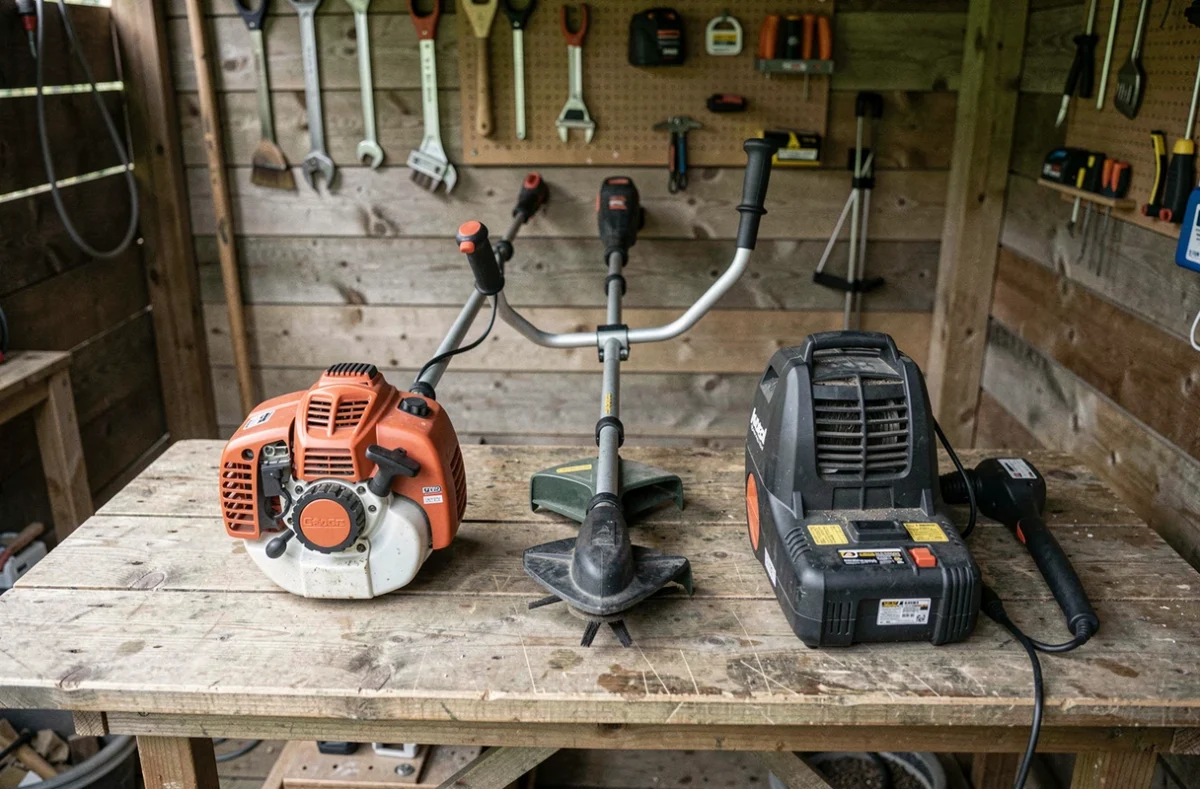
The motor type determines the machine’s runtime, weight, noise level and maintenance costs. Three technologies are available, each suited to a different type of user.
Petrol brush cutter
The petrol engine (two-stroke or four-stroke) remains the go-to choice for large plots and dense vegetation. It delivers sustained power over long sessions, without the runtime limits of a battery. The trade-offs are greater weight, significant noise and regular maintenance (fuel mix, spark plug and air filter).
A petrol model is suited to large plots with brambles and thick scrub. For a modest-sized garden, this much power is overkill.
Battery-powered brush cutter
Lithium-ion battery models have become more powerful in recent years. They are well suited to medium-sized gardens where work sessions do not exceed a single charge. The benefits include significantly less noise, lower weight and no engine maintenance.
Runtime remains the main limitation: the battery drains faster when cutting tough vegetation. A spare battery can partly offset this.
Corded electric brush cutter
Designed for small areas close to a power outlet, the corded brush cutter is the lightest and least expensive option. Its range is limited by the cable, making it best suited to edging, finishing work and soft grass around the house.
Cutting system: line, blade or brush knife, depending on the vegetation
The choice of cutting system determines what the machine can actually cut. There are three main types:
- Nylon line (round or square) cuts soft grass and low-growing vegetation. It is suitable for edging and tall, non-woody grass, but wears quickly on tough stems.
- A three- or four-tooth blade cuts brambles, thick nettles and young woody growth. It can handle lightly overgrown plots without straining the motor.
- A brush knife (or saw blade) cuts small-diameter stems, shrubs and stump shoots. Designed for powerful brush cutters with a harness, it turns the machine into a land-clearing tool.
For a typical garden, a model compatible with both line and blade will cover most needs. On land subject to OLD requirements, where pruning and waste management are part of the prescribed work, a model that accepts a brush knife means you won’t need multiple tools.
Ergonomics and harness: the factors that affect how long you can work
A poorly balanced brush cutter can tire your arms and back within minutes. Two features make a difference during longer sessions.
A carrying harness distributes the weight across your shoulders and hips. A simple shoulder strap is enough for a lightweight grass trimmer. For a petrol brush cutter fitted with a blade, a professional harness with back support is essential: it frees your arms to guide the cutting head without having to bear the machine’s weight.
The handlebar also plays an often underestimated role. A U-shaped handlebar (like a bicycle’s) provides a wide, stable grip, suited to sweeping movements across open ground. A D-shaped handle is better for tight spaces, between trees or along fences, where maneuverability matters most.
Before buying, check the machine’s operating weight (including the cutting head and fuel or battery). This gives a more reliable indication than the advertised weight without attachments.
Match the equipment to the work your land actually needs
A common mistake is to choose a brush cutter based only on the size of the garden. The right way to assess your needs is to consider three factors: the type of vegetation, how often you’ll work and any applicable regulatory requirements.
A regularly maintained garden with a few edges to tidy does not call for a petrol engine. A battery-powered grass trimmer can do the job with fewer drawbacks. By contrast, a plot in an OLD zone, with scrub to clear, branches to prune and waste to remove, calls for a versatile petrol model that accepts several cutting heads.
It’s best to choose a machine after reviewing the prefectural order (if applicable) and inspecting the land—not while browsing a catalogue. The right brush cutter is one that suits the work actually required or needed, not the most extreme scenario.