
Making daily life easier with children relies less on goodwill and more on concrete, testable, and measurable levers. What tools, habits, and micro-practices have a real effect on the smoothness of family days? Here are ten practical tips for daily life with your children, selected for their observable impact.
1. Shared family calendar on a mobile app

Family digital tools like shared calendars (Google Calendar, TimeTree, Cozi) centralize homework, extracurricular activities, and medical appointments in one place. Each parent and child who can read can check the upcoming week.
The main benefit: reducing conflicts related to forgetfulness. When Wednesday’s sports session or Friday’s school outing is visible to all, reminders no longer rely on just one adult. You can find tips on Astuces Parents to structure this type of digital organization.
2. Collaborative voice task list

Voice lists (Alexa, Google Home, Apple Shared Reminders) allow the child to add an item themselves without writing. “Add buy glue for tomorrow” takes three seconds. This system offloads the parents’ working memory.
The limit is clear: screen time and exposure to voice assistants must remain regulated. Reserving use for specific times (after school, preparing the backpack) avoids drifting into constant interaction with the device.
3. Micro-pause for emotional co-regulation before transitions

Two to three minutes of breathing, stretching, or “hug pause” before a difficult transition (homework time, bedtime) reduces oppositions. This practice of body-emotion co-regulation affects the autonomic nervous system of both the child and the adult simultaneously.
Where a task chart organizes time, the micro-pause prepares the emotional state. The two complement each other: planning the pause in the visual routine makes it automatic in a few weeks.
4. Shared consultation of the ENT with the child

School-family digital platforms (ENT, Klassly, Educartable) contain homework, messages from teachers, and class schedules. Involving the child in reading these messages improves their sense of autonomy.
Specifically: opening the ENT together on Sunday evening to plan the week. The child identifies deadlines themselves, which reduces parental stress related to school follow-up. The parent shifts from a controller role to a supporter role.
5. Visible distribution of household chores by age
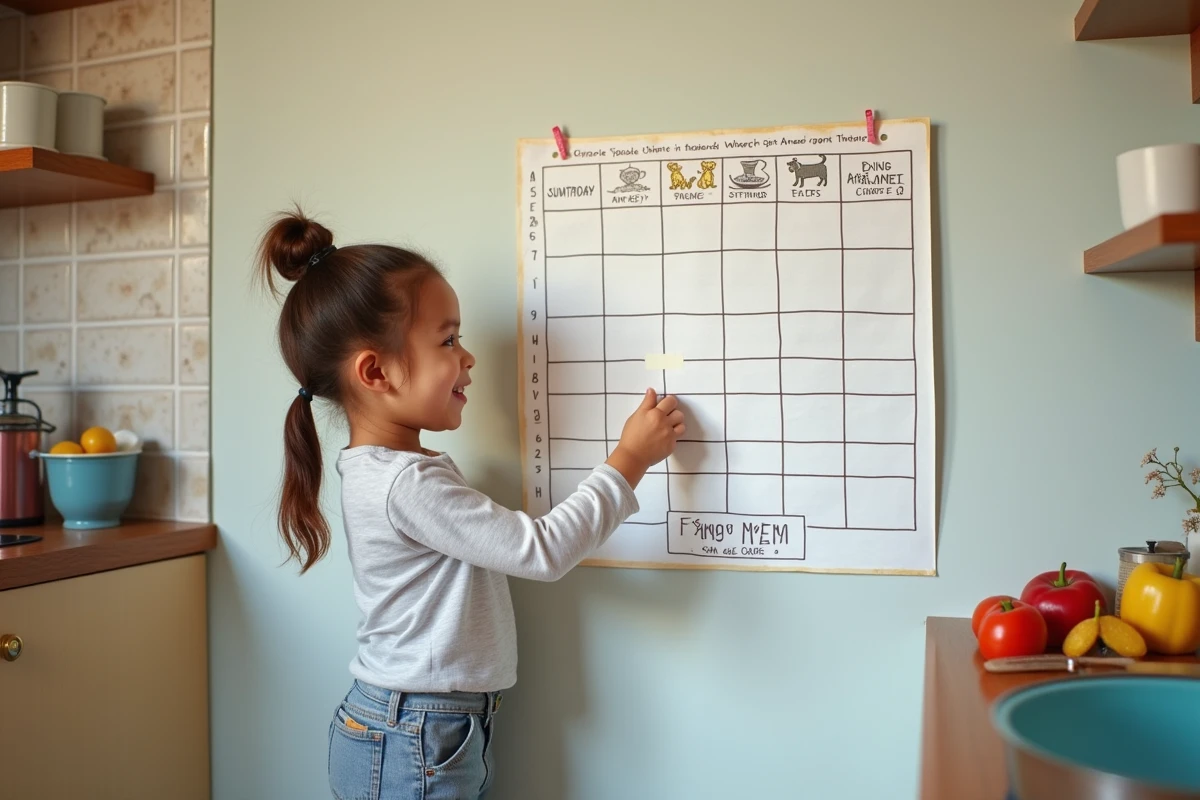
Displaying a physical chart (magnetic, Velcro) where each child sees their tasks according to their age produces two effects: developing autonomy and lightening the adult’s mental load.
| Age Group | Appropriate Tasks |
|---|---|
| 3-5 years | Put away toys, put clothes in the laundry |
| 6-8 years | Set the table, sort laundry by color |
| 9-12 years | Vacuum, prepare a simple dish |
The display makes the distribution transparent. A child who contests a task can check that the load is balanced between siblings.
6. Preparing belongings the night before
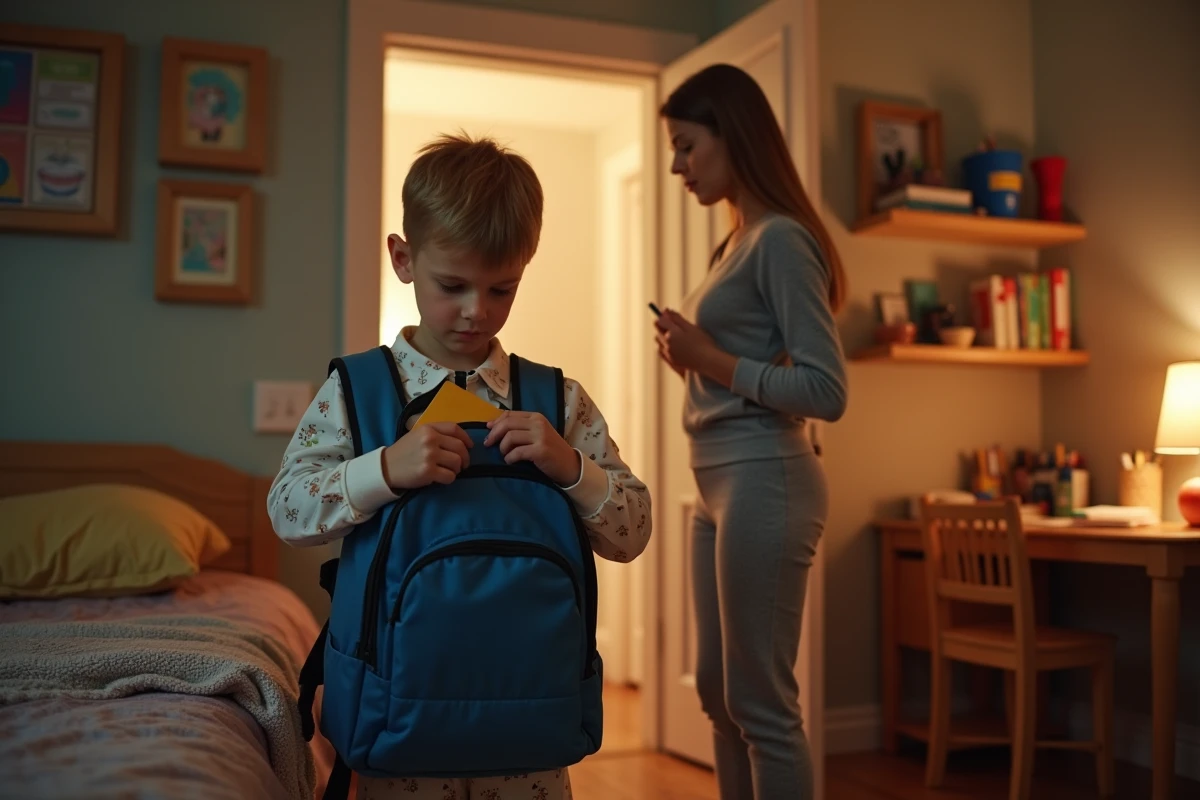
This advice may seem basic, but its effect on family mornings is often underestimated. Preparing the backpack, clothes, and snack the night before eliminates most sources of morning conflict.
The gain is measurable in minutes saved each morning and in the reduction of tense interactions. Involving the child in this preparation (choosing their clothes, checking their backpack) enhances their anticipation skills.
7. Weekly meal planning

Planning meals for the week on the weekend eliminates the daily question “what are we eating?”, a source of decision fatigue. The menu displayed on the refrigerator allows each family member to know what is planned.
The child can participate in choosing one or two meals per week. This involvement reduces refusals at the table and turns meal planning into a family activity rather than a solitary chore.
8. Cooperative games for waiting times
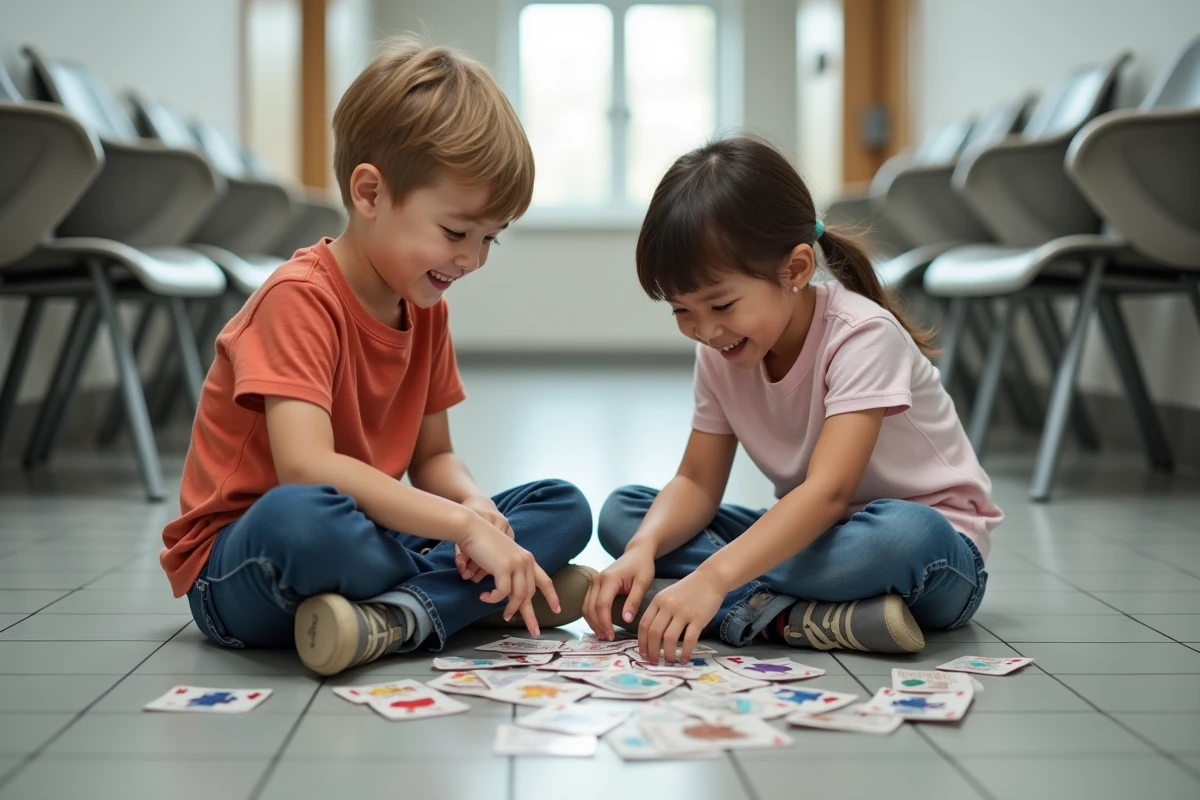
Waiting times (medical waiting room, transport, queue) are classic friction zones. Keeping a compact card game or an activity book in the bag transforms these moments.
Cooperative games (where you win together) work better than competitive games in these contexts, as they avoid disputes among children of different ages. A palm-sized card game is sufficient.
9. Gratitude ritual at mealtime

Asking each family member to mention a positive moment from their day during dinner takes only a minute. This positive focus ritual gradually changes the family climate.
The mechanism is simple: by looking for a good moment to share, the child trains their selective attention towards pleasant experiences. The parent does too. This is not magical thinking; it is a deliberately cultivated attentional bias.
10. Dedicated parent-child time without a goal

Set aside a regular time slot (even short) where the parent is available without a specific program, without a phone, without an educational goal. The child chooses the activity or does nothing.
This unstructured time strengthens the attachment bond more effectively than a planned outing to the museum. Regularity matters more than duration: a few minutes each day have a greater effect than a long monthly outing.
These ten practices require neither a special budget nor a complete reorganization of the household. Their common point: they shift part of the mental load onto tools, rituals, or the child themselves. Daily life with children does not become simple, but the most frequent frictions lose their systematic nature.